
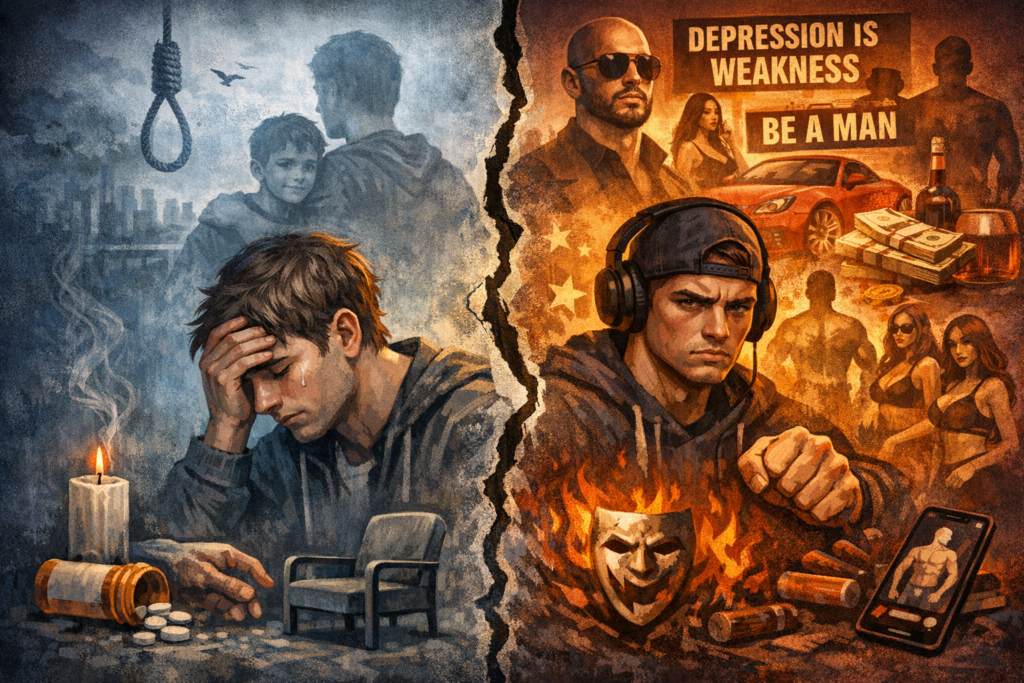
Watching Louis Theroux’s The Manosphere, I expected to feel angry. Instead, I felt profound sadness. Two young men told Theroux that depression is not real anymore, even though one of them had lost his older brother to suicide. I could feel the grief in his heart. Yet they were taught to deny depression. This denial is profoundly dangerous.
The manosphere often trivialises or rejects depression, framing it as weakness or lack of discipline. Influencers such as Andrew Tate claim depression is not real, presenting mental health struggles as personal failure. They promote toxic positivity, encouraging young men to repress sadness and convert it into anger, productivity, or wealth accumulation. This narrative discourages men from seeking help, even if they experience suicidal thoughts (American Psychiatric Association, 2013; Courtenay, 2000).
Many followers come from broken homes or traumatic backgrounds. They seek belonging, structure, and role models. The black-and-white narratives simplify life, providing community and identity where none exist. Chris Rose notes that group dynamics influence personal development; individuals look to others for guidance and acceptance (Rose, 2009). In the manosphere, this process is warped. Belonging comes at the cost of adopting harmful beliefs, repressing emotions, and perpetuating cycles of trauma.
The influencers themselves often experienced neglect, loss, or absent male role models. Their unresolved trauma is externalised and monetised, creating a toxic feedback loop that exploits young men searching for guidance.
Women are also impacted. Partners such as Angie, who ended relationships with prominent figures, and young women involved in OnlyFans collaborations, are monetised and objectified. They may seek validation, opportunity, or a sense of belonging, but are often exploited by men externalising their own trauma. Both men and women are wounded, yet their pain is used to perpetuate the ecosystem. A follow-up blog could explore the experiences of women in the manosphere more fully, but even here it is important to acknowledge their vulnerability and presence.
These communities encourage repression, externalisation of trauma, and misunderstanding of mental health. By teaching young men that depression is not real and emotions are weakness, they promote harmful coping mechanisms. Anger is glorified, vulnerability shamed, and empathy for self or others diminished. From a psychotherapeutic perspective, this is a recipe for psychological harm. Therapy provides an alternative: a space to explore emotions safely, understand behaviours without shame, and process trauma in a supportive environment.
In therapy, we focus on curiosity, reflection, and self-understanding. Trauma can explain behaviour, but does not excuse harmful actions. Understanding the roots of behaviour allows people to act differently without shame or self-recrimination. The question that returned to me while observing the manosphere was: who didn’t love you? This question applies to men, boys, girls and women in this ecosystem. Therapy nurtures awareness and emotional literacy that the manosphere actively discourages.
The manosphere thrives on pain and unmet need. Both male and female participants are wounded, often monetising trauma or internalising harmful narratives. Boys are drawn to community and belonging, while women may be exploited in the system. Therapy provides a counterbalance, offering curiosity, reflection, and understanding.
At its heart, this is about human beings who have experienced neglect, loss, and confusion. Asking who didn’t love you? is not about excusing behaviour but about recognising the brokenness and unmet needs behind it. Healing is possible when we offer empathy, guidance, and space for reflection. Each of us, whether as therapists, parents, or community members, has the opportunity to witness, support, and help build a world where young people and adults can feel seen, understood, and valued.
References