A few days ago, I came across a reel on social media that really made me stop and think. Now, I usually take reels with a healthy pinch of salt. Thirty seconds isn’t enough time to explain something as complex as the human mind, and anyone can sound convincing on the internet. But this one caught my attention.
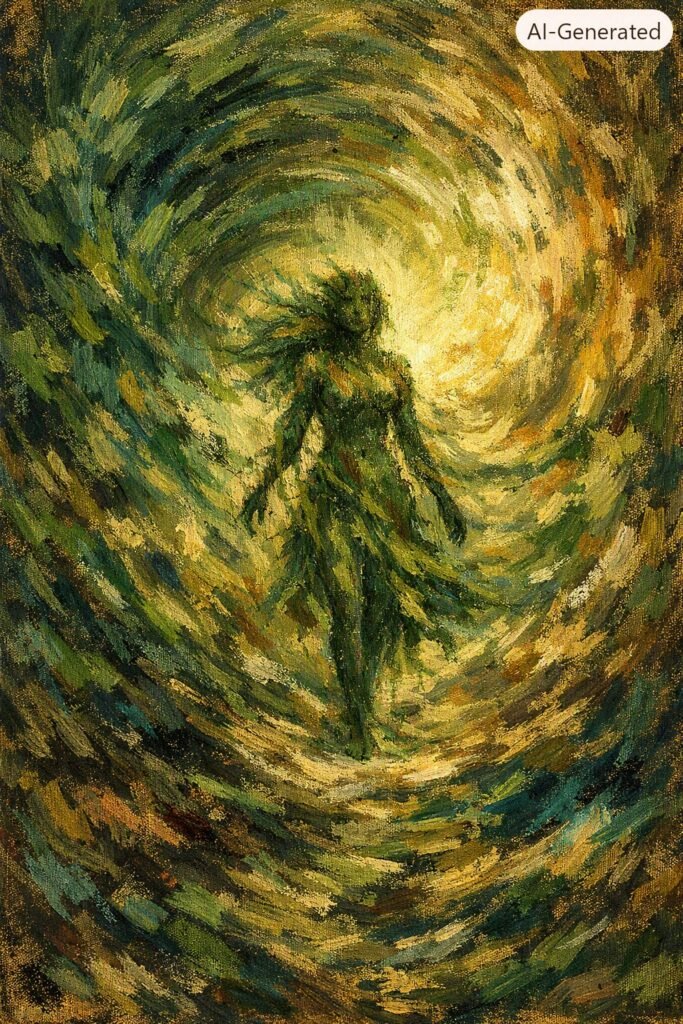
The woman in the reel suggested that, for many people, the years between about 35 and 42 can be some of the hardest of their lives. She described it as a period where everything seems to be stripped back. Relationships get questioned. Careers stop fitting. Old ways of coping no longer work. It can feel as though life is falling apart before it starts making sense again.
I don’t know whether those exact ages are meaningful. I suspect it’s different for everyone. But I remember sitting there thinking, “Well… things really did start going haywire for me when I was about thirty-five.”
I’m forty-two now, and if I’m honest, the last seven years have probably been the hardest of my life. There has been grief, COVID, changing careers, perimenopause, trauma, uncertainty, and more challenges than I ever imagined I would have to navigate. At times, it has felt relentless. Yet alongside all of that, something else has been happening too. Those same years have forced me to look at myself in a way I never had before.
That was the part I couldn’t stop thinking about.
So I did what I always do. I got curious.
Rather than accepting the reel as fact, I started reading. I’d already come across Carl Jung’s idea of individuation, the process of gradually becoming more fully yourself rather than continuing to live according to who you think you should be. But then I discovered that developmental psychology describes similar periods of identity change during midlife. Spiritual traditions have long spoken about the dark night of the soul, a painful period where old certainties fall away before something more authentic begins to emerge.
None of these theories are identical, and I don’t think any one of them has all the answers. What fascinated me was that completely different schools of thought, developed in different places and at different times, all seemed to be describing something remarkably similar.
That gave me a strange sense of comfort.
Not because it proved the reel was right, but because it made me wonder whether this really is part of being human. Maybe these periods of upheaval aren’t as unusual as they feel when we’re living through them. Maybe more people are quietly carrying this kind of transformation than we realise.
When I look back at myself at thirty-five, I see someone who had absolutely no idea what was coming. There was an innocence there that’s gone now. I trusted people more. My hair was thicker. My hormones hadn’t yet transformed into what I can only describe as an unmedicated dragon wondering where her coffee and pills have gone.
Life wasn’t perfect, but it felt simpler.
Now I’m forty-two.
My waist’s a little thicker, my hair’s a little thinner, and my nervous system has definitely seen some things. But I also love myself in a way I didn’t back then. I advocate for myself. I set boundaries without feeling like I owe everyone a detailed explanation. I can tolerate disagreement far better than I ever could before.
Perhaps the biggest change is that I’ve stopped trying to make myself smaller.
For years, I worried about being “too much.” Too outspoken. Too passionate. Too intimidating. Whenever someone seemed uncomfortable around me, my instinct was to dim my own light. To soften my opinions, second-guess myself, and make myself easier to be around.
Somewhere during these last seven years, that changed.
I started asking myself a different question. If I move through the world with kindness, decency and respect, why am I making myself smaller because someone else feels uncomfortable around confidence? Why am I carrying responsibility for their discomfort?
That’s not arrogance. It’s self-respect.
I’ve realised there’s a huge difference between being compassionate and abandoning yourself.
Looking back now, I can see that these years haven’t just been about surviving difficult circumstances. They’ve been about becoming someone I actually recognise. There were days spent lying in bed wondering how I was going to get through. There were tears, therapy, long walks, difficult conversations, endless books, research rabbit holes, and a relentless curiosity about why human beings think, feel and behave the way we do.
I became absolutely ravenous for answers.
Somewhere along the way, that curiosity became a psychology degree. Then it became a career. Now I spend my days sitting with other people as they try to make sense of their own lives, and I feel incredibly privileged to do so.
I don’t know whether that original reel was accurate. I certainly don’t believe there’s a magical age where everyone suddenly experiences an awakening. Human beings are far too complicated for that.
What I do believe is that many of us reach a point where the life we’ve built no longer fits the person we’re becoming. It might happen at thirty-five. It might happen at fifty-five. It might happen after grief, illness, divorce, parenthood, burnout or retirement. Sometimes life has a way of asking us difficult questions before we’re ready to answer them.
If you’re in one of those seasons right now, I hope you know this: questioning your life doesn’t necessarily mean you’re failing. Feeling lost doesn’t necessarily mean you’ve taken a wrong turn. Sometimes it means the old version of you no longer fits, and a more authentic version is quietly beginning to emerge.
Maybe you’re not falling apart.
Maybe you’re becoming yourself.